
Homemade Fougasse (French-Style Flatbread)

Homemade Fougasse, a delightful French-style flatbread, has a way of transforming any meal into an exciting experience. Its unique appearance and delightful aroma take center stage, making it irresistible. Fougasse features a beautifully crispy crust outside, with a soft and chewy interior that cries out for olive oil or a splash of balsamic vinegar. Perfect for dipping or savoring alongside soups and salads, this flatbread is an impressive showstopper for gatherings or a cozy night in.
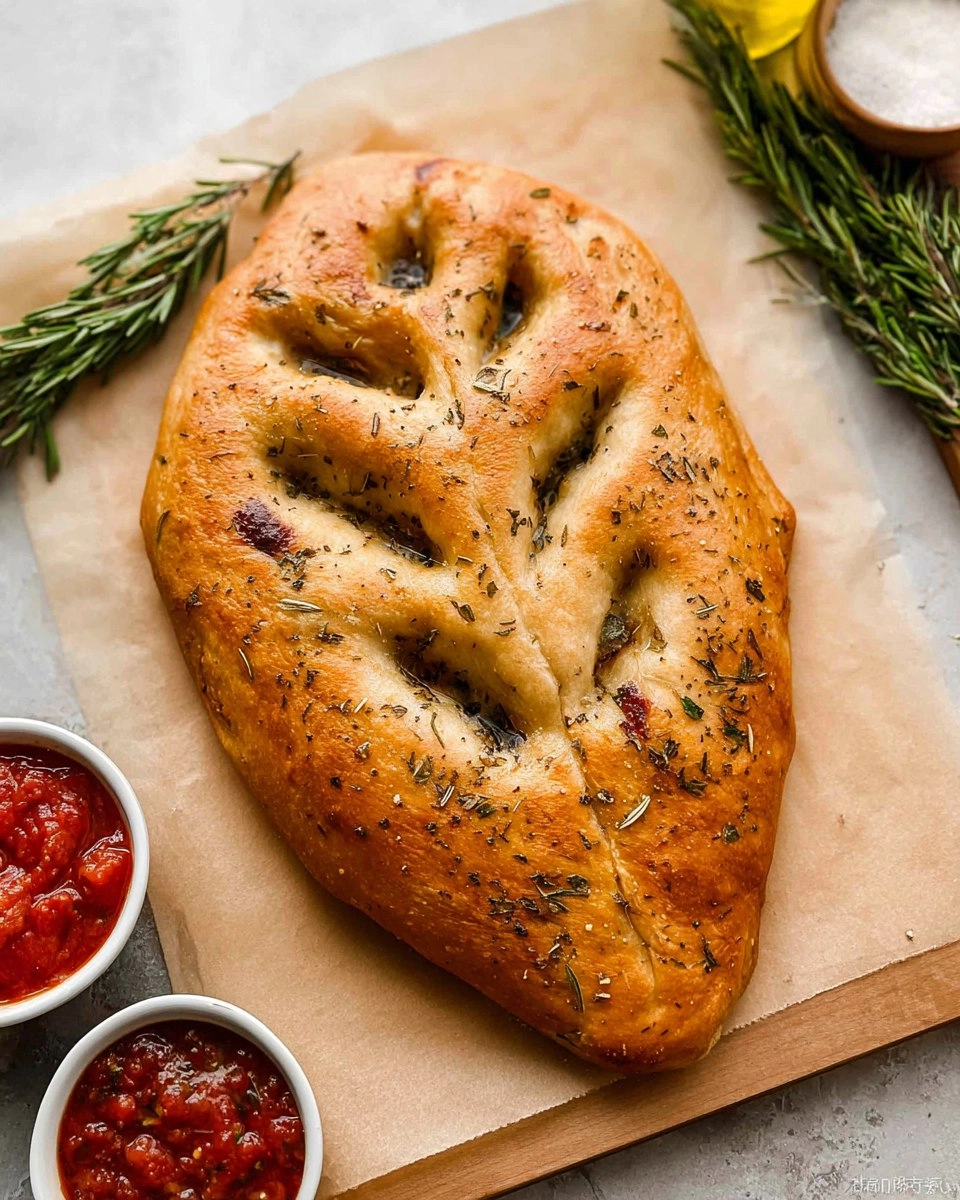
This recipe is incredibly accessible, inviting even novice bakers to uncover the art of bread-making without feeling overwhelmed. With a few simple ingredients, a little time, and some love, you can enjoy fresh fougasse straight from your oven. Whether you enjoy it warm on its own, paired with a charcuterie board, or as the centerpiece of your dinner table, you’ll find that you can’t resist the allure of homemade fougasse. So let’s get baking!
Table of Contents
Why You’ll Love This Recipe
- Simple & Quick: This homemade fougasse takes about 45 minutes of prep time, not including the dough resting periods.
- Irresistible Flavor: With olive oil and optional herbs, each bite is fragrant and rich, offering a delightful texture contrast that keeps you coming back for more.
- Eye-Catching Appeal: Its leaf-like shape makes for a stunning presentation, sure to impress guests.
- Flexible Serving: Perfect as an appetizer, snack, or alongside a hearty meal, it’s a versatile addition to any menu.
- Diet-Friendly Options: You can easily adapt the herb toppings to cater to specific dietary needs, and the dough can be made vegan as well!
Ingredients You’ll Need
- 1 cup (130g) bread flour: This is the base of our bread, providing structure. Spoon and level it for accuracy.
- 1/8 teaspoon instant or active-dry yeast: This tiny amount helps kickstart fermentation and rise. Instant yeast works faster, but both are perfect!
- 1/2 cup (120g/ml) room-temperature water: Use water around 70°F (21°C) for proper dough consistency.
- 1 and 1/2 cups (195g) bread flour: You’ll want more for the bulk of the dough. Remember to spoon and level!
- 1/2 cup (65g) whole wheat flour: This adds a heartier flavor and a bit more nutrition. Feel free to replace it with all-purpose flour if preferred.
- 3/4 teaspoon instant or active-dry yeast: This helps the main dough rise beautifully.
- 1 teaspoon table salt: Essential for flavor and also strengthens the dough structure.
- 1/2 cup (120g/ml) room-temperature water: Again, use the right temperature for optimal results.
- 2 tablespoons (28g) extra-virgin olive oil: Adds richness and moisture; it also helps keep the dough from drying out.
- Optional toppings: Flaky sea salt and fresh herbs like rosemary, thyme, or herbes de Provence for added flavor and visual appeal.
How to Make Homemade Fougasse (French-Style Flatbread)
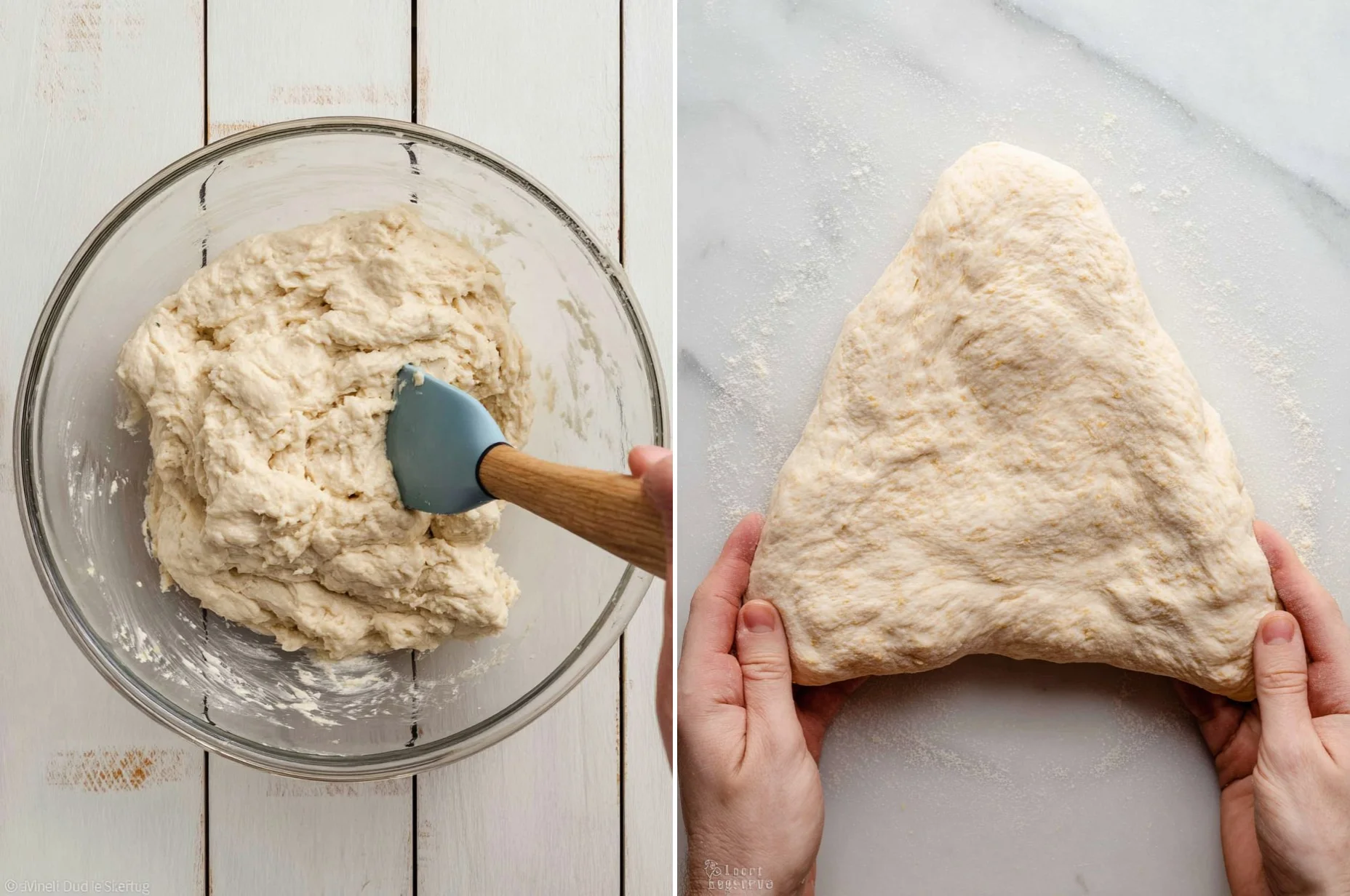
Prepare the Biga: In a medium bowl, whisk together the 1 cup (130g) bread flour and 1/8 teaspoon yeast. Add 1/2 cup (120g/ml) room-temperature water, stirring with a silicone spatula until combined. Cover with plastic wrap and let it rest at room temperature for 8–24 hours.
Mix the Dough: In a large bowl or the bowl of a stand mixer fitted with a dough hook, mix 1 and 1/2 cups (195g) bread flour, 1/2 cup (65g) whole wheat flour, 3/4 teaspoon yeast, and 1 teaspoon salt. Add the biga, along with 1/2 cup (120g/ml) room-temperature water and 2 tablespoons (28g) olive oil. Stir until a shaggy dough forms.
Knead the Dough: If using a stand mixer, knead on medium-low speed for 3–5 minutes until the dough is smooth and slightly tacky. For hand-mixing, turn the shaggy dough onto a lightly floured surface and knead for 3–5 minutes until it becomes smooth but remains slightly sticky. Avoid adding too much flour.
First Rise: Lightly coat a mixing bowl with olive oil, place the dough inside, turning to coat all sides. Cover tightly and let it rise for 45 minutes to 2 hours.
Fold the Dough: Once risen, visualize a clock on your dough’s surface; use an oiled spatula or hands to fold at the 12 o’clock, pulling it towards 6 o’clock, turning the bowl 90 degrees afterward. Repeat until you’ve gone around the bowl once, totaling four folds. Flip the dough seam-side down.
Second Rise: Cover tightly again and allow to rise for another 45 minutes to 2 hours.
Shape the Fougasse: Turn the dough out onto parchment paper, using your fingers to press it into a rounded triangle or egg shape, roughly 12 inches long and 6 inches wide at the base.
Rest before Cutting: Cover lightly and let the shaped dough rest for 30 minutes to 2 hours.
Cut for Design: Once rested, take a sharp knife or pizza wheel and cut the dough lengthwise down the center, stopping an inch from both ends. Create 3 or 4 diagonal cuts on each side, gently stretching the cuts to create leaf-like holes.
Final Rise & Preheat Oven: Cover lightly again for 30 minutes to an hour. Meanwhile, preheat your oven to 450°F (232°C). If you have a baking stone, place it on the center rack; otherwise, preheat a large flat or rimmed upside-down baking sheet.
Prepare for Baking: Brush the dough with olive oil and sprinkle optional herbs or flaky sea salt if desired. Carefully slide the fougasse, on the parchment, onto the preheated stone or baking sheet.
Bake: Bake your fougasse for about 20 minutes. It should turn golden brown and sound hollow when tapped. You can also check for doneness using an instant-read thermometer; it should read between 190–200°F (88–93°C).
Serve and Enjoy: If desired, brush the freshly baked fougasse with more olive oil while it’s warm. The fougasse is fantastic served warm as a dipping bread for oil and balsamic vinegar, alongside salads or soups, or as part of a cheese board.
Best Enjoyed Fresh: Fougasse is at its best the day it’s baked. Store leftovers covered at room temperature for up to two days, or reheat in a 350°F (177°C) oven for 5–8 minutes to restore crispness.
Storing & Reheating
To keep your homemade fougasse fresh, store it at room temperature, covered, for up to two days to maintain its delightful texture. If you want to keep it for longer, consider refrigerating it in an airtight container for about a week. Alternatively, you can freeze it by wrapping tightly in plastic and placing it in a freezer bag for up to three months. When ready to enjoy again, reheat in a 350°F (177°C) oven for about 5–8 minutes, allowing the crunchy crust to return while keeping the chewy interior intact.
Chef’s Helpful Tips
- Avoid over-kneading the dough, which can cause the bread to be tough. You want it just smooth and elastic.
- For a more complex flavor, increase the fermentation time of your biga; 24 hours works wonderfully for deeper taste.
- If the dough feels too sticky, resist the urge to add too much flour; a slightly tacky dough is ideal for light and airy bread.
- Experiment with toppings! Try adding cheese or olives before baking for even more deliciousness.
- Make ahead: You can prepare the biga the night before to save time and effort on the day of baking.
This homemade fougasse is an absolute treat. It combines straightforward preparation with a remarkable outcome that never fails to impress. Whether you enjoy it warm from the oven or as part of a larger meal, you’re bound to savor every delightful bite. Feel free to add your twist with various toppings or serve it alongside your favorite dishes. Enjoy every moment of this baking adventure!
Recipe FAQs
How long does fougasse last?
Can I make this recipe vegan?
What should I serve with homemade fougasse?
Can I freeze fougasse?
⭐ If you make my Homemade Fougasse (French-Style Flatbread) recipe, Awesome! I would love to hear from you. Please give it a star rating and review below! 👇
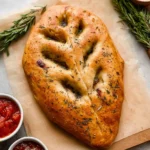
Homemade Fougasse (French-Style Flatbread)
Experience the delightful flavor of Homemade Fougasse, a unique French flatbread featuring a rustic texture and simple ingredients. It’s a perfect addition to any meal, whether enjoyed warm with dipping oil or as an accompaniment to soup and salad.
- Prep Time 45 minutes
- Cook Time 720 minutes
- Yield 12 servings 1x
Ingredients
- 1 cup (130g) bread flour
- 1/8 teaspoon instant or active-dry yeast
- 1/2 cup (120g/ml) room-temperature water
- 1 and 1/2 cups (195g) bread flour, plus more as needed
- 1/2 cup (65g) whole wheat flour
- 3/4 teaspoon instant or active-dry yeast
- 1 teaspoon table salt
- 1/2 cup (120g/ml) room-temperature water
- 2 tablespoons (28g) extra-virgin olive oil, plus more as needed
- optional, for topping: flaky sea salt and herbs, such as rosemary, thyme, or herbes de provence
Instructions
- In a medium bowl, combine the bread flour and yeast. Add the water and mix until combined. Cover with plastic wrap and let rest at room temperature for 8–24 hours.
- In a large bowl, combine bread flour, whole wheat flour, yeast, and salt. Add the biga, water, and olive oil. Mix until a shaggy dough forms. Kneading can be done with a stand mixer or by hand.
- If using a stand mixer, knead on medium-low speed for 3–5 minutes, until the dough is slightly tacky. For hand mixing, knead on a floured surface for 3–5 minutes until smooth. Avoid adding too much flour, keeping the dough slightly tacky.
- Coat the insides of the mixing bowl with olive oil and place the dough inside, turning to coat all sides.
- Cover tightly and let the dough rest for 45 minutes to 2 hours.
- Visualize a clock on top of the dough, folding at 12 o'clock. Gently stretch the dough to the opposite side and repeat this process for a total of 4 folds. Flip the dough seam side down.
- Cover tightly and let the dough rest for another 45 minutes to 2 hours.
- Transfer the dough onto parchment paper and shape it into a rounded triangle or egg shape, roughly 12 inches long by 6 inches wide at the base.
- Lightly cover and let it rest for 30 minutes to 2 hours.
- Use a sharp knife to cut the dough lengthwise down the center and then make 3-4 diagonal cuts on each side. Stretch the cuts gently to enhance their appearance.
- Cover loosely and let rest for 30 minutes to 1 hour. Meanwhile, preheat the oven to 450°F (232°C). Preheat a baking stone or an upside-down baking sheet on the center rack.
- Brush the fougasse with olive oil, adding herbs and/or sea salt if desired. Carefully place it onto the preheated surface.
- Bake for about 20 minutes, until golden brown and hollow sounding when tapped. Check for an internal temperature of 190–200°F (88–93°C).
- If desired, brush the bread with more olive oil after baking. Serve warm with dipping oil and balsamic vinegar, soups, salads, or as part of a cheese board.
- Store leftovers covered at room temperature for up to 2 days. Reheat in a 350°F (177°C) oven for 5–8 minutes to restore crispness.
Notes
For a more flavorful bread, consider using herbs in the dough or as toppings.
Ensure your water is around room temperature for optimal yeast activation.
The dough can be made a day in advance for better flavor development.
Nutrition
- Serving Size: 1 slice
- Calories: 150
- Sugar: 1g
- Sodium: 150mg
- Fat: 3g
- Saturated Fat: 0.5g
- Unsaturated Fat: 2g
- Trans Fat: 0g
- Carbohydrates: 28g
- Fiber: 3g
- Protein: 5g
- Cholesterol: 0mg
Nutritional information is an estimate. The nutritional values for your final dish may vary based on measuring differences and products used.